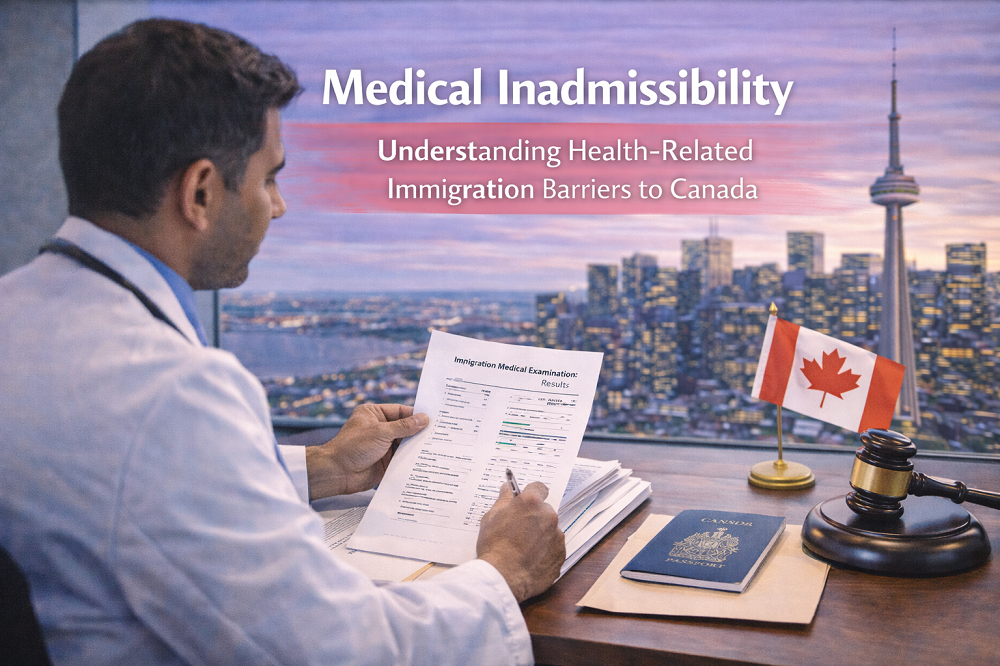
When applying to visit, study, work, or immigrate to Canada, foreign nationals must meet certain health requirements. Canadian immigration authorities evaluate whether applicants are medically admissible before granting entry or permanent residence.
At LB Pathway, in collaboration with LandBird Law Firm, we assist applicants in understanding medical admissibility requirements and exploring possible solutions if health concerns affect their immigration applications.
What is Medical Inadmissibility?
Medical inadmissibility occurs when an immigration officer determines that an applicant’s health condition may pose a risk to public health, public safety, or place an excessive burden on Canada’s healthcare or social services. :contentReference[oaicite:0]{index=0}
Every applicant for permanent residence and some temporary residents must undergo an immigration medical examination performed by an approved panel physician before a final immigration decision is made. :contentReference[oaicite:1]{index=1}
Main Reasons for Medical Inadmissibility
Under Canadian immigration law, there are three primary grounds on which a person may be considered medically inadmissible.
- Danger to Public Health – conditions that may be contagious or pose a risk to the population.
- Danger to Public Safety – medical conditions that could cause unpredictable or dangerous behaviour.
- Excessive Demand on Health or Social Services – situations where an applicant’s medical condition may require costly treatment or services. :contentReference[oaicite:2]{index=2}
What is “Excessive Demand”?
Excessive demand refers to cases where an applicant’s medical condition is expected to require healthcare or social services that exceed Canada’s established cost threshold or significantly increase waiting times for Canadian residents. :contentReference[oaicite:3]{index=3}
Immigration authorities estimate the cost of medical treatment over several years to determine whether the demand on publicly funded healthcare services would be excessive. :contentReference[oaicite:4]{index=4}
Examples of Health Conditions Considered
There is no specific list of conditions that automatically result in medical inadmissibility. Each case is evaluated individually based on medical evidence and projected costs. :contentReference[oaicite:5]{index=5}
However, certain medical conditions may raise concerns during immigration assessments.
- Chronic kidney disease requiring dialysis
- Serious cardiac conditions
- Advanced neurological disorders
- Severe mental health conditions
- Communicable diseases such as active tuberculosis
These conditions may be evaluated based on their potential impact on public health or the healthcare system. :contentReference[oaicite:6]{index=6}
Immigration Medical Examination
Applicants for Canadian immigration are typically required to undergo a medical examination that may include:
- Physical examination
- Blood tests
- Urine tests
- Chest X-rays
- Review of medical history
Medical results are reviewed by Immigration, Refugees and Citizenship Canada (IRCC) to determine whether the applicant meets Canada’s health admissibility requirements.
Options to Overcome Medical Inadmissibility
In some cases, individuals may still have options to address or overcome medical inadmissibility concerns.
1. Responding to a Procedural Fairness Letter
If immigration authorities believe an applicant may be medically inadmissible, they may issue a procedural fairness letter allowing the applicant to respond with additional medical evidence or explanations.
2. Submitting a Mitigation Plan
Applicants may demonstrate that they will privately manage or pay for the costs of their medical treatment, reducing the potential burden on Canada’s healthcare system. :contentReference[oaicite:7]{index=7}
3. Temporary Resident Permit (TRP)
In certain circumstances, a Temporary Resident Permit may allow a person with medical inadmissibility to enter Canada temporarily if the benefits of entry outweigh potential risks. :contentReference[oaicite:8]{index=8}
Exemptions to Medical Inadmissibility Rules
Some immigration applicants are exempt from excessive demand assessments, including:
- Refugees and protected persons
- Sponsored spouses or partners
- Dependent children being sponsored
These exemptions recognize humanitarian and family reunification considerations in Canadian immigration policy. :contentReference[oaicite:9]{index=9}
How LB Pathway & LandBird Law Firm Can Help
Medical inadmissibility cases can be complex and require careful documentation and legal strategy. Our team assists clients in evaluating medical concerns and preparing appropriate responses to immigration authorities.
- Medical inadmissibility assessments
- Immigration medical exam guidance
- Preparation of mitigation plans
- Procedural fairness letter responses
- Legal support through LandBird Law Firm
Understand Your Medical Immigration Options
A health condition does not always prevent you from entering or immigrating to Canada. With proper guidance and documentation, many applicants can successfully address medical admissibility concerns.
Contact LB Pathway today to learn how medical inadmissibility may affect your immigration application and explore possible solutions.