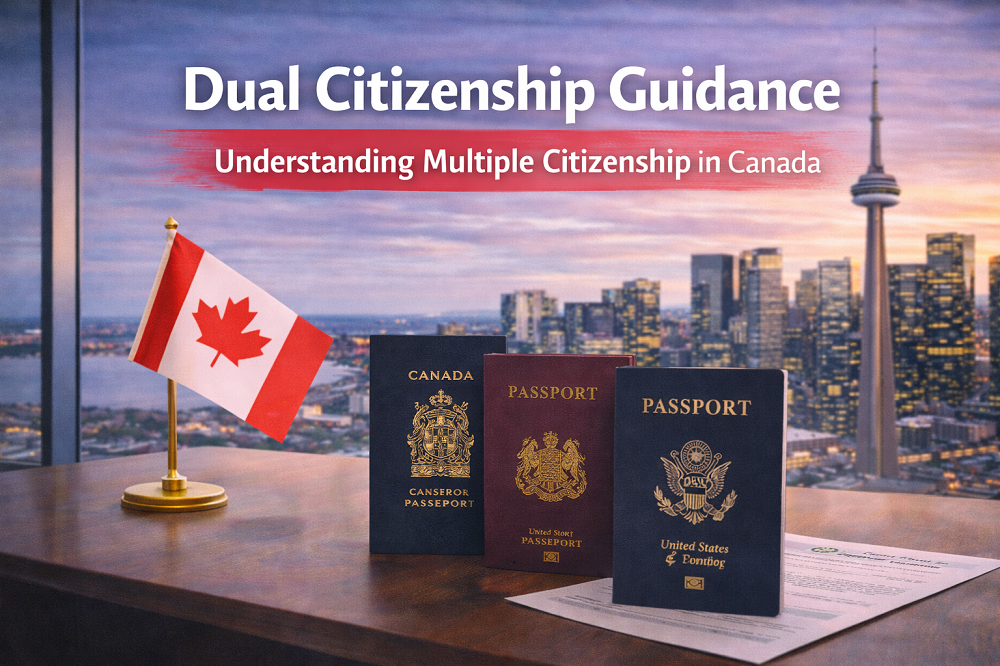
Dual citizenship, also known as multiple citizenship, occurs when an individual is legally recognized as a citizen of two or more countries at the same time. Canada permits dual citizenship, allowing individuals to retain their original nationality while becoming Canadian citizens.
At LB Pathway, in collaboration with LandBird Law Firm, we provide guidance for individuals who wish to obtain Canadian citizenship while maintaining their citizenship from another country.
Does Canada Allow Dual Citizenship?
Yes, Canada officially recognizes dual or multiple citizenship. Canadian law allows individuals to hold citizenship in another country without losing their Canadian citizenship.
However, whether you can maintain dual citizenship depends on the laws of your home country. Some countries permit multiple citizenships, while others may require individuals to renounce their citizenship when acquiring another nationality.
Ways to Obtain Dual Citizenship in Canada
There are several common ways individuals may become dual citizens with Canada.
1. Citizenship by Birth
Children born in Canada automatically become Canadian citizens. If the child also qualifies for citizenship from their parents’ country of origin, they may automatically hold dual citizenship.
2. Citizenship by Descent
Individuals born outside Canada may still qualify for Canadian citizenship if at least one parent is a Canadian citizen. This process is commonly referred to as citizenship by descent.
3. Citizenship by Naturalization
Immigrants who become Canadian citizens through the naturalization process may retain their original citizenship if their country permits dual nationality.
Benefits of Dual Citizenship
- Ability to live, work, and study in two countries
- Access to social benefits and services in both nations
- Greater travel flexibility with multiple passports
- Expanded employment and business opportunities
- Ability to maintain cultural and family connections
Responsibilities of Dual Citizens
Dual citizenship can also come with certain responsibilities. Individuals may need to comply with the laws and obligations of both countries.
- Paying taxes depending on residency rules
- Following immigration and travel requirements
- Carrying appropriate passports when traveling
- Meeting legal obligations in both countries
For example, Canadian law requires dual citizens traveling to Canada by air to carry a valid Canadian passport.
Countries That Allow Dual Citizenship with Canada
Many countries permit dual citizenship with Canada, including the United States, the United Kingdom, Australia, and many European Union nations. However, some countries do not allow dual citizenship and may require individuals to renounce their original nationality if they obtain Canadian citizenship.
Things to Consider Before Applying
- Review the citizenship laws of your home country
- Understand potential tax or legal obligations
- Confirm whether dual citizenship is recognized
- Prepare documentation for citizenship applications
How LB Pathway & LandBird Law Firm Can Help
Understanding dual citizenship rules can be complex because laws vary between countries. Our team assists clients in evaluating their eligibility and preparing citizenship applications while considering the rules of both countries.
- Dual citizenship eligibility assessment
- Canadian citizenship application guidance
- Proof of citizenship assistance
- Legal support through LandBird Law Firm
- Strategic immigration planning
Explore Your Dual Citizenship Options
If you are considering becoming a Canadian citizen while keeping your current nationality, professional guidance can help you navigate the legal requirements involved.
Contact LB Pathway today to learn how dual citizenship with Canada may be possible for you.